
Power and Possession – 2026 AHRC International Conference
14–16 September 2026, The Queen's College, Oxford
| Ture Laiti is an indigenous youth activist who advocates for the rights of the Sami people at a grassroots, national, and international scale. Ture is the vice chair of the Finnish Sami Youth Association, as well as a member of the UN Global Indigenous Youth Caucus, and an Indigenous Fellow at the UN Office of the Commissioner for Human Rights. In 2025, Ture successfully campaigned for a change to the Finnish constitution which gave greater autonomy to the Sami people through the Sami parliament. | |
| Professor Arkotong Longkumer is the Chair of Anthropology at the School of Divinity at the University of Edinburgh. He researches repatriation, nationalism, and ecology, predominantly in relation to northeast India. For his PhD research, Professor Longkumer worked with the Zeme Naga people in India's Assam state. More recently, he has written a book on the Hindu nationalist movement and its relationship to northeast India. |
Our international partners for the 2026 conference include:
- a.r.t.e.s. Graduate School of Cologne University
- Australian National University
- Massachusetts Institute of Technology
- Stockholm University
- Vrije Universiteit Brussel
 |
 |
 |
 |
 |
|
|
George AdamsGeorge is a first year English PhD student at the University of Cambridge. His research examines the role of particularity as a form of ecological attention towards the biosphere. He considers how Romantic-period writers use particularity, defined in Johnson’s Dictionary (1755) as a form of ‘distinct notice or enumeration’, to parse and fashion ‘many different and often competing natures’ (Alan Bewell). |

|
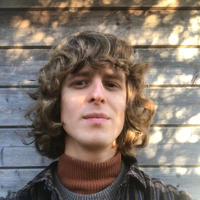
Juan Pablo Angarita BernalJuan Pablo is a first year doctoral student in Digital Humanities, University of Cambridge, based at Cambridge Digital Humanities (CDH). His research explores how GLAM (Galleries, Libraries, Archives and Museums) institutions in Colombia and Brazil have acted as sociotechnical infrastructures for cultural heritage since the 1990s. |
|
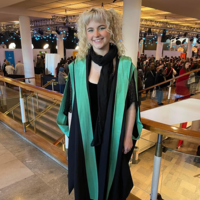
Charles BlandIn his first year studying a PhD at the University of Cambridge, Charles is researching the philosophy of mathematics, seeking to understand the nature of the subject and the practice of mathematicians better. In particular he's interested in considering: What do mathematicians mean when they say that a theorem is 'beautiful'? Should mathematics be counted as an art alongside painting, music, and film? Why are some mathematical proofs singled out as 'explanatory', when all (valid) proofs establish the truth of their results? What is the role of mathematics in explaining phenomena in the natural, non-mathematical world? |
|
Jemma Louise ForsterJemma is a second year PhD student in the Faculty of English at the University of Cambridge. Her thesis examines the function of Diana as a signifier of female homoeroticism in Elizabethan and Jacobean texts, interrogating the critical understanding of Diana’s primary association with Elizabeth I and the cult of chastity in early modern English literature. |

|
Jiayao JiangJiayao is a third year PhD student in the Italian Section, Faculty of Modern and Medieval Languages and Linguistics, University of Cambridge. Her research is titled “Reconstruction of urban heritage in post-war Rome, 1944-1951: Transnational flows and national identity.” The specific focus of the research is on the remarkable and complex transnational flows of individuals and groups, civilian and military, moving through Rome during this period. |

|
Edward LambEd is a DPhil student in Philosophy at Worcester College, University of Oxford. His research explores the themes of ageing and old age in ancient Greco-Roman philosophy and practical ethics. He investigates conceptions of ageing in Plato, Aristotle, Cicero, and the Stoics, also considering how their accounts shed light on contemporary experiences of old age amidst increased isolation and intergenerational division. |

|
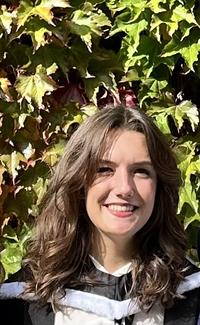
Lilja RuismäkiLilja is a doctoral student in her first year in History at King's College, University of Cambridge. Her research examines the history of vagrancy and workhouse internment in late 20th century Finland. In particular her research examines the later period of vagrancy regulation, from 1943 to 1987, considering how changing concepts of citizenship, normalcy and morality were reflected in public discourse, ‘vagrancy care’ and the eventual repeal of the Vagrancy Law. |
|
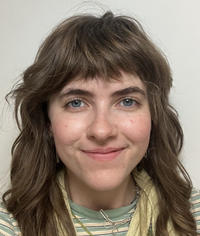
Mia ThomasMia is a first year DPhil student in Theology at Wolfson College, University of Oxford. Her research focuses on protestant non-conformist women between 1620 and 1640 in England. In particular she will produce a prosopography to trace female figures; this will extend our understanding of radicalism across class and geographic boundaries. This questions current London-centric accounts and interrogates scholarly perceptions of ‘radicalism’. |
|
Elena TrowsdaleElena is a second year Collaborative Doctoral Award PhD at the Open University and Oxford University Gardens, Libraries and Museums (GLAM) Division). Her research is qualitative analysis methods for public engagement measurement in Oxford University’s GLAM sector. In particular she will be analysing linguistic, and other qualitative data derived from public engagement initiatives or feedback from each of the six GLAM institutions associated with Oxford University, including the Bodleian and Ashmolean. |
The first five Cambridge AHRC International Conferences were organised and supported by the Cambridge AHRC DTP. Conference themes included: Trust and Truth (2019), Space and Surface (2018), Tradition and Transformation (2017), Time and Temporality (2016). You can find out more about these past conferences here: https://cambridgeahrcdtpconferences.co.uk/.
The subsequent five conferences: Borders and Boundaries (2025), Across Distance (2021), Hybridity (2022), Entanglements (2023), and Constellations (2024) were organised by a committee of students from the OU, Oxford, and Cambridge, with support from the Open-Oxford-Cambridge AHRC DTP.

